
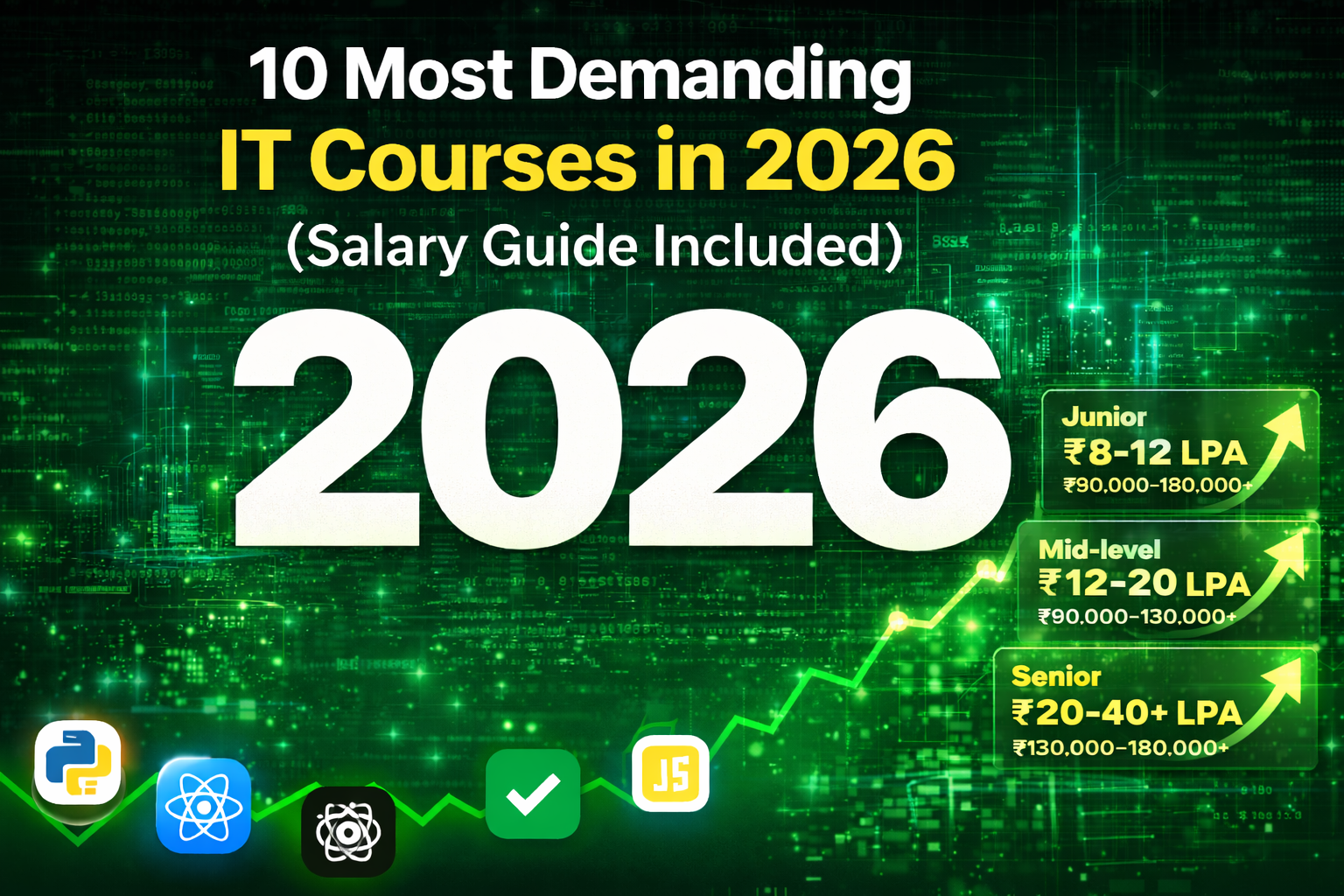
 Looking for the 10 Most Demanding IT Courses in 2026 (Salary Guide Included)? The numbers tell a compelling story. Data Scientists now earn an average of ₹17,00,000 per year, while specialized Cybersecurity roles command ₹25,00,000 to ₹30,00,000+ annually. These aren’t just impressive figures — they represent real career opportunities in today’s digital economy.
The IT landscape is evolving rapidly, and choosing the best IT courses can significantly impact your earning potential. With Cloud Computing professionals earning between ₹4,00,000 and ₹18,00,000 per year and the cloud computing market projected to exceed $1.5 trillion by 2030, the growth potential is undeniable. Additionally, studies show that professionals with in-demand certifications in AI, Cloud, and Cybersecurity often earn 10% to 25% more than their non-certified colleagues.
We’ve researched the top 10 courses in demand in India and globally to help you determine which IT field courses offer the best return on investment. From AI Engineering with salaries around ₹10,00,000 per year to Cybersecurity with earnings between ₹8,00,000 and ₹18,00,000 annually, these trending courses in software represent the future of tech careers. Let’s explore which is the best IT course for future success and how you can position yourself at the forefront of this digital revolution.
Artificial Intelligence & Machine Learning
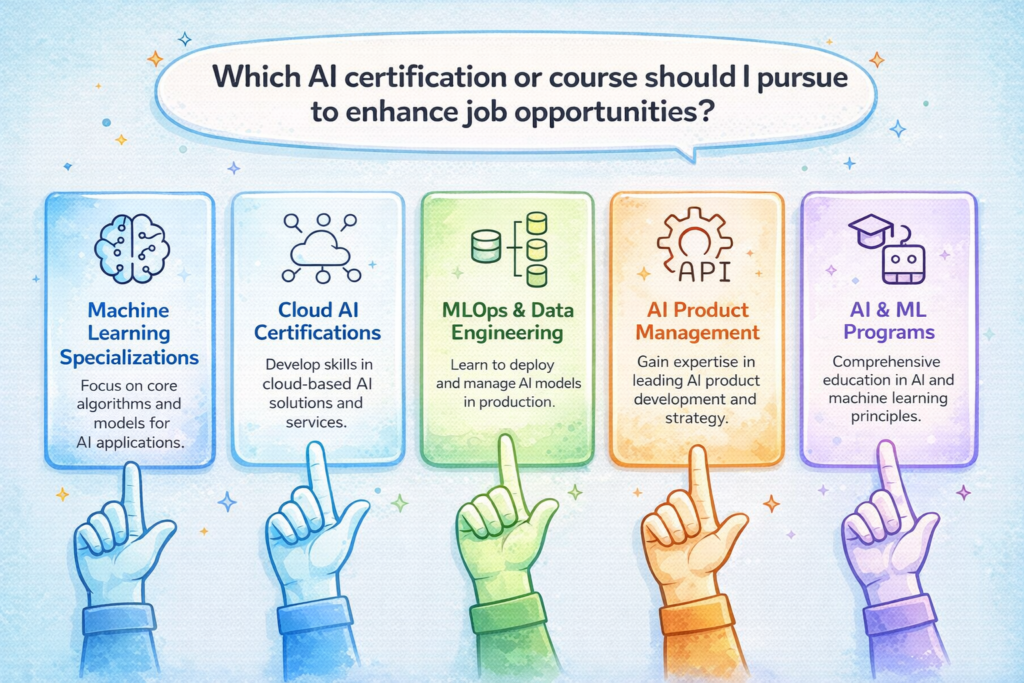
Artificial Intelligence and Machine Learning stand at the forefront of the most demanding courses in future tech. The AI market is projected to reach INR 34342.84 billion globally by 2027, making it a prime career choice for tech enthusiasts.
AI & ML Course Overview
AI and ML courses typically cover algorithms, data science workflows, neural networks, and real-world implementations. Programs range from beginner-level fundamentals to advanced techniques in deep learning and natural language processing. Most curricula include Python programming, data preprocessing, machine learning models, and hands-on projects using industry-standard tools.
Success in AI requires mastery of:
- Programming languages (Python, R)
- Mathematics and statistics (algebra, probability)
- Machine learning frameworks (TensorFlow, PyTorch)
- Data analysis and visualization
- Problem-solving and logical reasoning
AI & ML Career Opportunities
The field offers diverse career paths, including Machine Learning Engineer, Data Scientist, AI Researcher, and NLP Engineer. Industries actively recruiting AI talent include healthcare, finance, retail, manufacturing, and cybersecurity. According to NASSCOM, India will need one million AI professionals by 2026.
AI & ML Salary Range
Machine Learning Engineers in the US earn an average of INR 15,680,166.03 annually, with top performers making over INR 25,314,135.24 in major tech hubs. In India, AI/ML professionals can earn between INR 19.9-22 lakhs per year, with experience significantly boosting compensation.
Top AI & ML Certifications
Notable certifications include AWS Certified AI Practitioner, Google AI Certification, and IBM AI Engineering Professional Certificate. Specialized certifications like AI+ Cloud™ (INR 337,099.90) and AI+ Developer™ focus on specific skill sets.
Who Should Take AI & ML
Ideal candidates include technology enthusiasts with analytical mindsets, professionals seeking upskilling, and students with backgrounds in computer science, mathematics, or statistics. Even those without extensive technical backgrounds can begin with foundational courses, subsequently building specialized expertise.
Data Science & Analytics
For a comprehensive overview, be sure to check our detailed discussion on the 10 most demanding it courses in 2026 salary guide included.
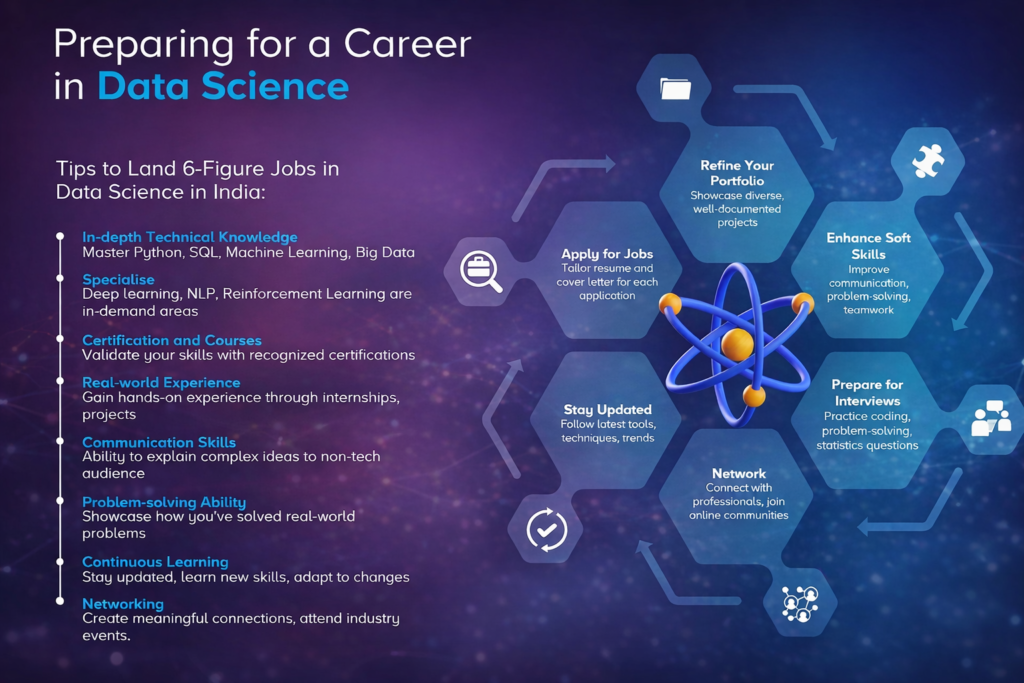
Data Science emerges as one of the highest-paying IT disciplines in 2026, with employment projected to grow 34% from 2024 to 2034. This remarkable growth rate makes it among the most demanding courses in future tech careers.
Data Science Course Overview
Data science courses typically cover statistical analysis, programming languages, data visualization, and machine learning algorithms. Most programs include fundamental mathematics, data manipulation techniques, and real-world projects. Advanced programs from institutions like IIM Calcutta and IIIT Bangalore offer specialized training focused on business applications and analytics.
Key Skills Covered in Data Science
Mastery in these core skills is essential for data science professionals:
- Programming languages (Python included in 69.89% of job postings, R in 45.65%)
- Machine learning (featured in 56.83% of data science roles)
- SQL database skills (required in 50.13% of positions)
- Data visualization using Tableau or Power BI
- Statistical analysis and probability
Data Science Career Opportunities
The field offers diverse roles including Data Scientist, Data Analyst, Business Analyst, and Machine Learning Engineer. Furthermore, specialized positions like AI Researcher and Data Architect command premium salaries. With approximately 23,400 openings projected annually, the job market remains exceptionally favorable.
Data Science Salary Range
Entry-level data scientists with 0-3 years experience earn approximately ₹5-8 lakhs annually. This increases substantially with experience—professionals with 5 years experience earning around ₹17 lakhs. Notably, in tech hubs like Bangalore and Gurgaon, salaries exceed the national average by nearly 15%.
Top Data Science Certifications
Prestigious certifications include Certified Analytics Professional (CAP), Microsoft Azure Data Scientist Associate, SAS Certified Data Scientist, and Open Certified Data Scientist. These credentials validate specialized skills and typically remain valid for 2-5 years.
Who Should Take Data Science
Ideal candidates possess strong analytical thinking and communication skills. The field suits mathematics graduates, software developers, and business analysts looking to upskill. Even those without technical backgrounds can start with foundational courses before progressing to advanced topics.
Cloud Computing (AWS, Azure, GCP)
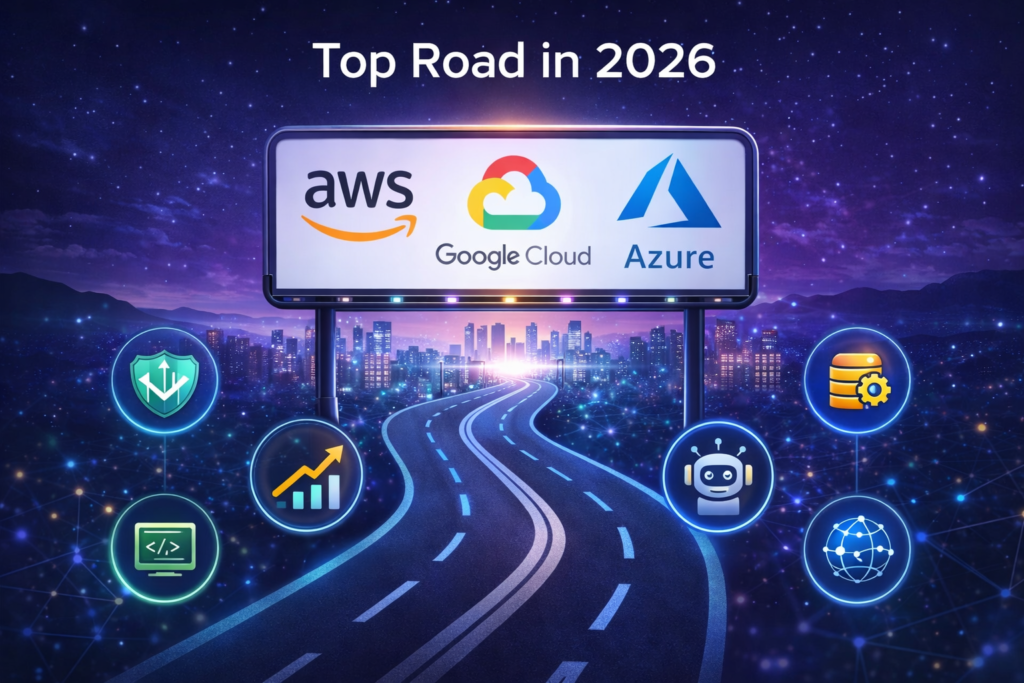
Cloud computing has rapidly evolved into a cornerstone of digital transformation, ranking among the most demanding courses in future tech. Gartner forecasts global end-user spending on public cloud services to reach INR 56990.56 billion in 2024, up from INR 47337.43 billion in 2023.
Cloud Computing Course Overview
Beginner-friendly cloud courses typically span 6–12 weeks, requiring 3-5 hours weekly (40-60 total study hours). These programs cover cloud essentials, service models (IaaS, PaaS, SaaS), deployment models (public, private, hybrid), and hands-on experience with major platforms like AWS, Azure, and Google Cloud. Most curricula include security fundamentals, practical exercises, and self-paced learning options perfect for busy professionals.
Key Skills Covered in Cloud Computing
Essential cloud computing skills include:
- Programming languages (Java, JavaScript, Python, Go)
- Database management (SQL, NoSQL, Linux)
- Containerization (Docker, Kubernetes)
- Security and compliance expertise
- Understanding of major cloud platforms
- DevOps practices and automation
Cloud Computing Career Opportunities
The field offers diverse career paths such as cloud administrator (INR 10.8M avg.), support engineer (INR 10.6M avg.), security analyst (INR 15M avg.), network engineer (INR 6.8M avg.), and cloud engineer (INR 8.8M avg.). Moreover, NASSCOM and Oliver Wyman project cloud computing growth to create approximately 14 million jobs in India through 2026.
Cloud Computing Salary Range
Entry-level cloud positions typically start at INR 4-8 LPA, while specialized roles command substantially more. Cloud architects earn around INR 20M annually, cloud developers INR 12M, and cloud security engineers INR 11.3-16.4M. Location also impacts earnings—Bangalore professionals earn INR 3-15M, whereas those in Hyderabad receive INR 3.2-12.6M annually.
Top Cloud Certifications
AWS offers certifications at three levels: Foundational (Cloud Practitioner, INR 8.4K), Associate (INR 12.6K), and Professional/Specialty (INR 25.3K). Similarly, Google Cloud provides credentials from Foundational (Cloud Digital Leader) through Professional (Cloud Architect) levels. Microsoft’s popular certifications include AZ-900 (Azure Fundamentals) and Azure Solutions Architect Expert.
Who Should Take Cloud Computing
Ideal candidates include IT professionals seeking career advancement, students with programming backgrounds, and business professionals looking to understand cloud technology. Even those without extensive technical experience can begin with foundational courses, making cloud computing exceptionally accessible for career changers.
Cybersecurity & Ethical Hacking
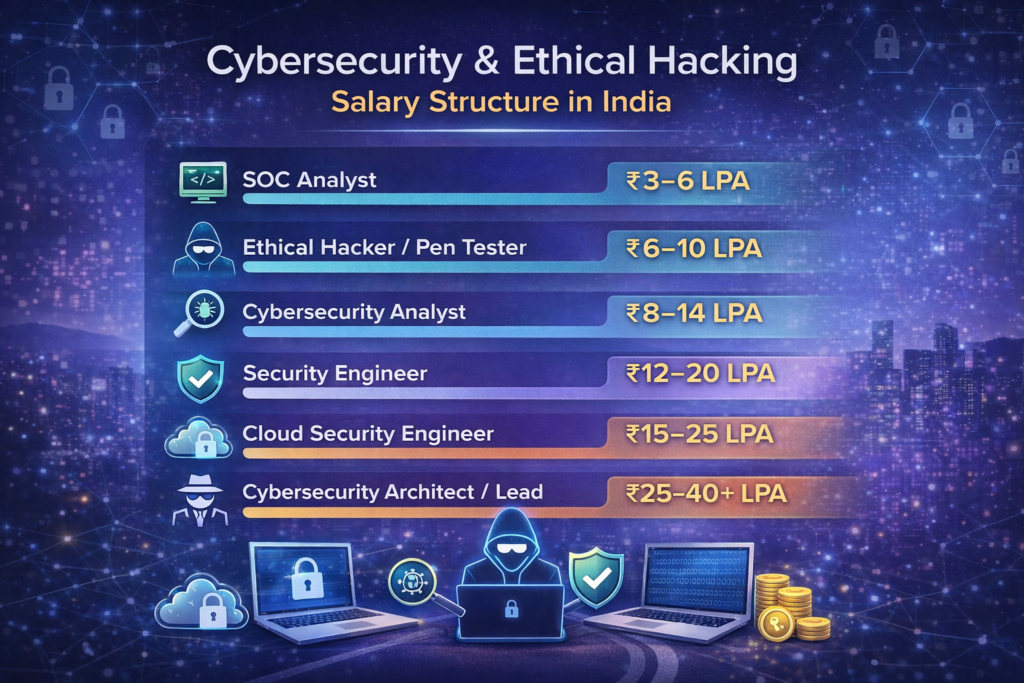
Cybersecurity emerges as a critical shield in our digital era, with data breaches rising exponentially and organizations scrambling to protect valuable information. This field has become one of the most demanding courses in future tech, particularly as cybercrime damages are expected to cost companies worldwide INR 790.1 trillion annually by 2025.
Cybersecurity Course Overview
Cybersecurity programs typically range from 3-6 months for certifications to 2-4 years for degrees. These courses cover threat detection, network security, cryptography, ethical hacking, and risk management. Most curricula emphasize practical training with industry tools like firewalls, monitoring systems, and security platforms—ensuring graduates are employment-ready.
Key Skills Covered in Cybersecurity
Essential cybersecurity skills include:
- Technical: Scripting (Python, PowerShell), intrusion detection, network security, operating systems expertise, cloud security
- Framework knowledge: NIST, DSCI, NCSS
- Workplace: Communication, collaboration, risk management, adaptability, critical thinking
Cybersecurity Career Opportunities
The field offers diverse career paths including Security Analyst, Penetration Tester, Incident Responder, and Chief Information Security Officer. Indeed, NASSCOM forecasts one million cybersecurity job opportunities in India by 2025. Industries actively recruiting security professionals span finance, healthcare, government, e-commerce, and education.
Cybersecurity Salary Range
Entry-level cybersecurity analysts earn approximately INR 7,00,000 annually, while experienced professionals command significantly higher compensation. Senior roles like Security Architect can reach INR 20,00,000, and CISOs may earn over INR 63,00,000 yearly. Professionals in Bangalore and Gurgaon earn 52% above the national average.
Top Cybersecurity Certifications
In-demand certifications include:
- Certified Information Systems Security Professional (CISSP) – most recognized globally
- Certified Ethical Hacker (CEH) – focused on offensive security
- CompTIA Security+ – ideal entry-level credential
- GIAC Security Essentials (GSEC) – validates practical security skills
Who Should Take Cybersecurity
Ideal candidates include IT professionals seeking advancement, graduates with computer science backgrounds, and those interested in solving complex problems. The field suits individuals with analytical mindsets, attention to detail, and those who can remain calm under pressure. Despite common misconceptions, many cybersecurity roles maintain regular hours without requiring advanced degrees.
Full Stack Web Development
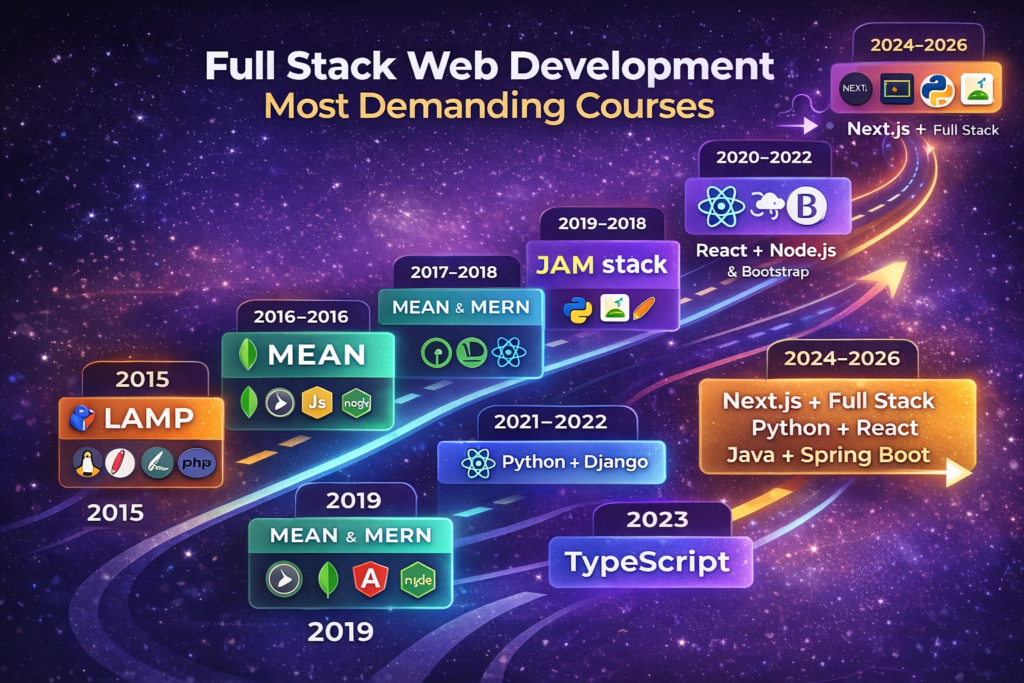
Full Stack Web Development ranks among the most demanding courses in future tech careers, offering professionals the unique ability to handle both client and server-side development. According to Stack Overflow’s 2025 Developer Survey, full-stack development represents the most popular role globally, with 27% of 43,560 respondents working in this field.
Full Stack Course Overview
Full Stack programs typically run for 8 months and cover comprehensive web development skills. These courses focus on building complete web applications from scratch, teaching front-end interfaces, back-end logic, database management, and deployment techniques. Most curricula include hands-on projects that reinforce theoretical concepts, helping students create professional portfolios that demonstrate end-to-end development capabilities.
Key Skills Covered in Full Stack
Essential full-stack skills encompass:
- Front-end technologies: HTML, CSS, JavaScript, React
- Back-end languages: Python, PHP, Ruby, Java, Node.js
- Database management: SQL, MongoDB, PostgreSQL
- Version control: Git, GitHub
- UI/UX principles and responsive design fundamentals
Full Stack Career Opportunities
The field offers diverse paths including Full Stack Developer (primary role), Front-End Developer, Back-End Developer, UI/UX Engineer, and Software Developer. The World Economic Forum’s Future of Jobs Report 2025 identifies software developers among the top five fastest-growing positions worldwide from 2025-2030.
Full Stack Salary Range
Entry-level full-stack developers earn approximately ₹4,04,000 annually, while experienced professionals can command up to ₹20,00,000. Location significantly impacts compensation—Pune offers the highest at ₹10,97,194 annually, followed by Mumbai (₹9,82,126) and Hyderabad (₹9,50,749).
Top Full Stack Certifications
Notable credentials include The Hong Kong University’s Full Stack Developer Course, Full Stack Web Development Specialization by University of New Mexico, and Udacity’s Full Stack Developer Nanodegree.
Who Should Take Full Stack
Ideal candidates include beginners with no prior programming experience, college students looking to upskill, graduates and working professionals seeking career transitions, and non-technical individuals interested in web development. Those passionate about both design and functionality will find this field particularly rewarding.
DevOps & Site Reliability Engineering
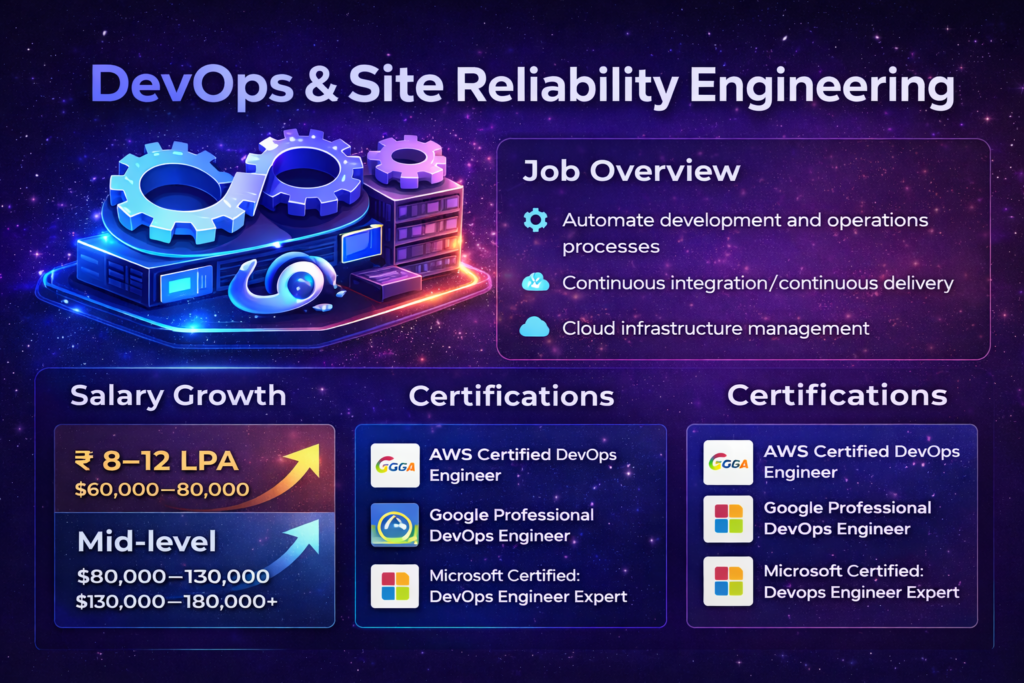
DevOps bridges the traditional gap between development and operations teams, establishing itself among the most demanding courses in future tech careers. The DevOps market is expected to reach a staggering INR 869.12 billion by 2026, highlighting its growing industry significance.
DevOps Course Overview
DevOps programs typically span 8-16 weeks, focusing on integration, automation, and continuous delivery methodologies. Comprehensive curricula cover infrastructure as code, continuous integration/deployment pipelines, and cloud-native application management. Consequently, students gain practical experience through hands-on labs and real-time challenges, with many programs featuring project-based assessments reflecting real-world scenarios.
Key Skills Covered in DevOps
Essential DevOps competencies include:
- Programming and scripting (Python, Shell)
- Cloud platforms expertise (AWS, Azure, GCP)
- Containerization (Docker, Kubernetes)
- Infrastructure as Code (Terraform, Ansible)
- CI/CD pipeline implementation
- Monitoring and logging tools mastery
DevOps Career Opportunities
The field offers diverse roles including DevOps Engineer, Site Reliability Engineer, Release Manager, Cloud DevOps Specialist, and Automation Expert. Furthermore, organizations increasingly seek professionals with combined development and operations expertise, making DevOps engineers highly marketable across industries.
DevOps Salary Range
Entry-level DevOps engineers earn approximately ₹6-9 LPA, while experienced professionals command significantly higher compensation. Mid-level professionals (2-5 years experience) earn ₹12-20 LPA, and senior DevOps architects can reach ₹25-40 LPA. In specialized fields like SRE, salaries range from ₹18.8-20.8 LPA.
Top DevOps Certifications
In-demand credentials include AWS Certified DevOps Engineer-Professional (₹25,314), Microsoft Azure DevOps Solutions (AZ-400), Certified Kubernetes Administrator, and HashiCorp Terraform Associate. These certifications validate expertise in provisioning, operating, and managing distributed systems.
Who Should Take DevOps
Ideal candidates include software developers, system administrators, and IT professionals seeking career advancement. Even freshers with basic Linux knowledge and scripting skills can begin DevOps training. Above all, those passionate about automation, continuous improvement, and bridging technical teams will thrive in this rapidly evolving field.
Data Engineering & DataOps
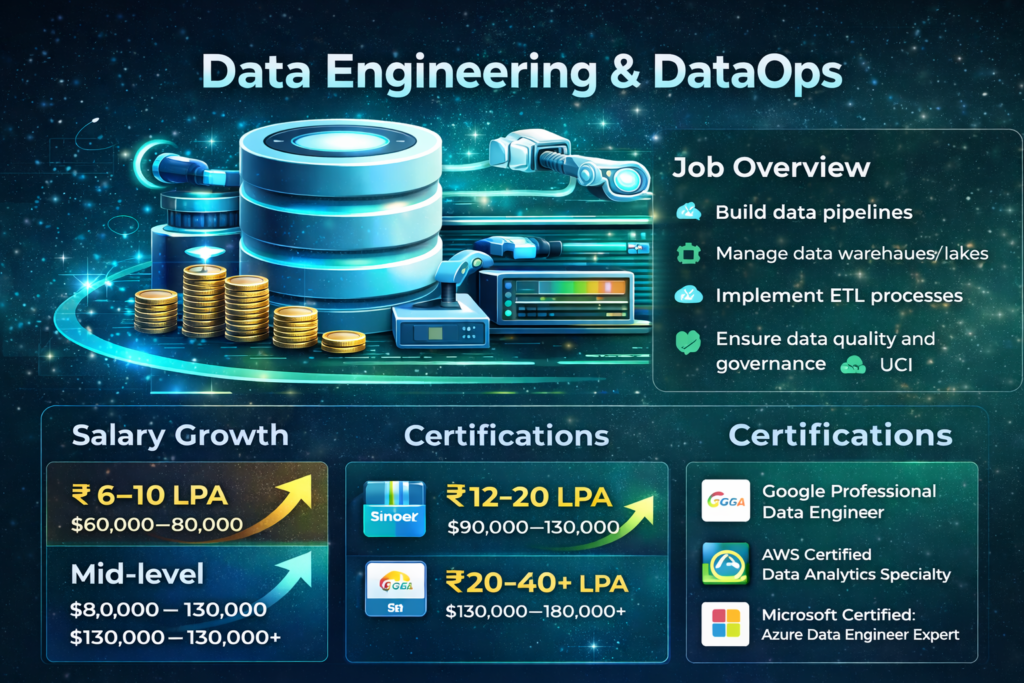
The booming field of Data Engineering has become a cornerstone of modern data ecosystems, with reports ranking “big data specialists” among the fastest-growing tech jobs worldwide. In essence, this field focuses on building the infrastructure that powers AI systems and analytical solutions.
Data Engineering Course Overview
Data engineering programs typically run for 6-8 months, covering database management, ETL processes, and data pipeline creation. Most curricula include Python programming, SQL mastery, and hands-on experience with big data frameworks like Hadoop and Spark. These courses often feature real-world projects that help students build portfolios demonstrating end-to-end data pipeline development skills.
Key Skills Covered in Data Engineering
Essential data engineering competencies include:
- Programming in Python, Java or Scala
- Database expertise (SQL, NoSQL)
- ETL frameworks and pipeline creation
- Cloud services (AWS, Azure, GCP)
- Big data technologies (Hadoop, Spark, Kafka)
Data Engineering Career Opportunities
The field offers diverse roles like Data Engineer, Big Data Engineer, Data Architect, and Data Infrastructure Engineer. Undoubtedly, demand exceeds supply—with over 36,000 vacant positions across India. Major tech hubs like Bangalore lead with 6,288 openings, followed by Hyderabad, Pune, and Mumbai.
Data Engineering Salary Range
Entry-level data engineers earn approximately ₹6.5-9 lakhs annually, while mid-career professionals (3-5 years) command ₹7.6-11 lakhs. Senior engineers with 5+ years experience can earn ₹20-30 lakhs yearly. In the US, salaries range from $90-115K for mid-career positions.
Top Data Engineering Certifications
Notable credentials include IBM Data Engineering Professional Certificate (₹3,797 monthly), AWS Certified Data Engineer (₹12,657), Google Cloud Professional Data Engineer (₹16,876), and Databricks Certified Data Engineer. These certifications validate specialized skills and typically require renewal every 2-3 years.
Who Should Take Data Engineering
Ideal candidates include those with backgrounds in computer science, IT, or mathematics. First thing to remember, many professionals transition from software engineering, data analytics, or database administration roles. Even those without technical degrees can succeed through certifications and practical experience, as employers often value demonstrated competence over formal education.
UI/UX Design

UI/UX Design has emerged as an essential discipline in today’s digital landscape, with companies increasingly recognizing that exceptional user experiences drive business success. This creative yet analytical field continues to rank among the most demanding courses in future tech careers.
UI/UX Course Overview
UI/UX programs typically run 3-6 months, covering user research, wireframing, prototyping, and usability testing. Comprehensive curricula focus on solving real-world design problems through visual communication principles and user-centered methodologies. Most courses include hands-on projects that help students build professional portfolios demonstrating end-to-end design processes.
Key Skills Covered in UI/UX
Success in UI/UX requires mastery of:
- Visual design (color theory, typography, layouts)
- Research methods (interviews, surveys, usability testing)
- Prototyping tools (Figma, Adobe XD, Sketch)
- Information architecture and wireframing
- Communication and problem-solving (valued by 73% of hiring managers)
UI/UX Career Opportunities
The field offers diverse roles including UX Designer, UI Designer, Product Designer, and UX Researcher. Certainly, many organizations prioritize hiring UX talent—87% of managers report recruiting designers as their top priority. Industries actively seeking UI/UX professionals span technology, healthcare, finance, and e-commerce.
UI/UX Salary Range
Entry-level UI/UX designers earn approximately ₹7.7-8.5 lakhs annually, with experienced professionals commanding up to ₹18-25.4 lakhs. Location impacts earnings—Bengaluru offers ₹10.5 lakhs, followed by Gurgaon (₹8.8 lakhs) and Pune (₹7.7 lakhs).
Top UI/UX Certifications
In-demand credentials include Google UX Design Certificate (₹4,134 monthly), Nielsen Norman Group UX Certification (starting at ₹531,596), and Designlab UX Academy (₹611,673-₹729,505). These programs combine theoretical knowledge with practical applications through industry-relevant projects.
Who Should Take UI/UX
Ideal candidates include creative problem-solvers, professionals seeking career changes, and graphic designers looking to upgrade skills. Unlike other tech fields, UI/UX welcomes non-technical backgrounds—marketing, sales, customer support professionals often excel due to their understanding of user psychology.
Data Analytics & BI Tools
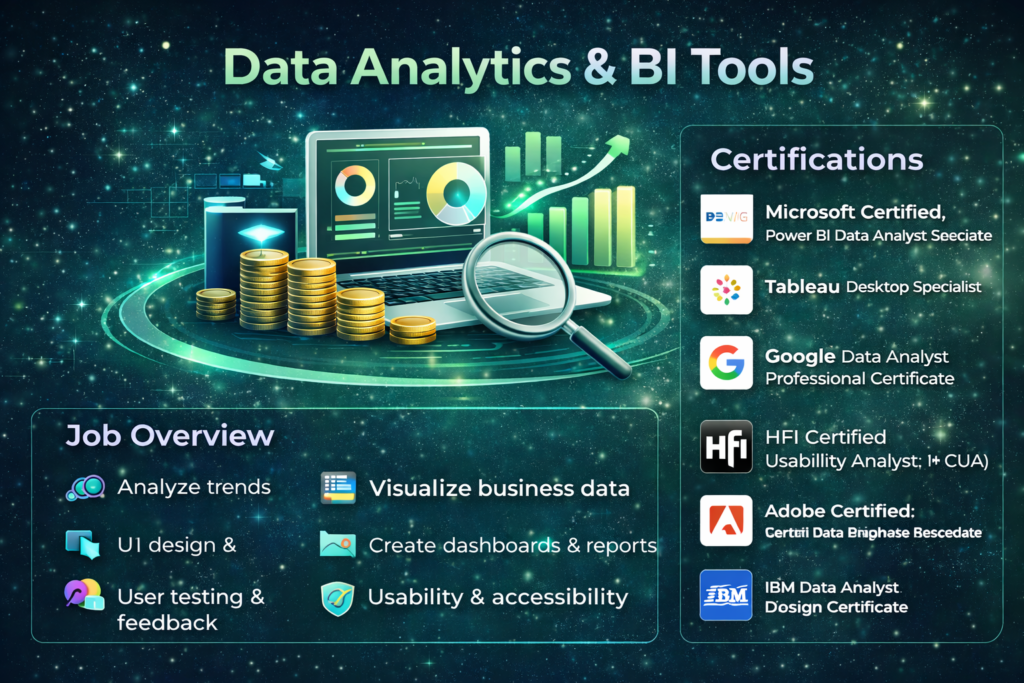
Data Analytics and Business Intelligence tools represent crucial elements in the modern business arsenal, making them among the most demanding courses in future career landscapes. Data analysis job openings in India have increased by 52% within the past five years, with a 17.4% rise just from January through July 2024.
Data Analytics Course Overview
Typical programs span 3-4 months, focusing on data collection, transformation, and visualization techniques. Curricula typically cover database querying, statistical analysis, and visualization tools. Most courses emphasize hands-on learning through real-world projects and case studies.
Key Skills Covered in Data Analytics
Essential competencies include:
- SQL for database communication
- Statistical programming using R or Python
- Data visualization tools like Tableau and Power BI
- Probability and statistics fundamentals
- Data management and cleaning expertise
Data Analytics Career Opportunities
The field offers roles like Data Analyst (INR 6.9 LPA), Business Intelligence Analyst (INR 9.8 LPA), and Data Visualization Engineer (INR 8.9 LPA). Currently, India’s data analytics market is projected to grow by 35.8% from 2025-2030.
Data Analytics Salary Range
Entry-level analysts earn approximately INR 4.5 LPA, progressing to INR 5.5 LPA (1-3 years), INR 7.5 LPA (3-6 years), and INR 9.2 LPA (6-9 years). Location impacts earnings—Gurgaon offers INR 7.7 LPA, followed by Bangalore at INR 7.4 LPA.
Top Data Analytics Certifications
Leading credentials include Google Data Analytics Professional Certificate (INR 4,134 monthly), CompTIA Data+, and Microsoft Power BI Data Analyst Associate.
Who Should Take Data Analytics
Ideal candidates include analytical thinkers, business professionals seeking data-driven insights, and anyone with curiosity about how things work. Fundamentally, no prior experience or specific tools are required—just high-school-level math.
Software Testing & Automation
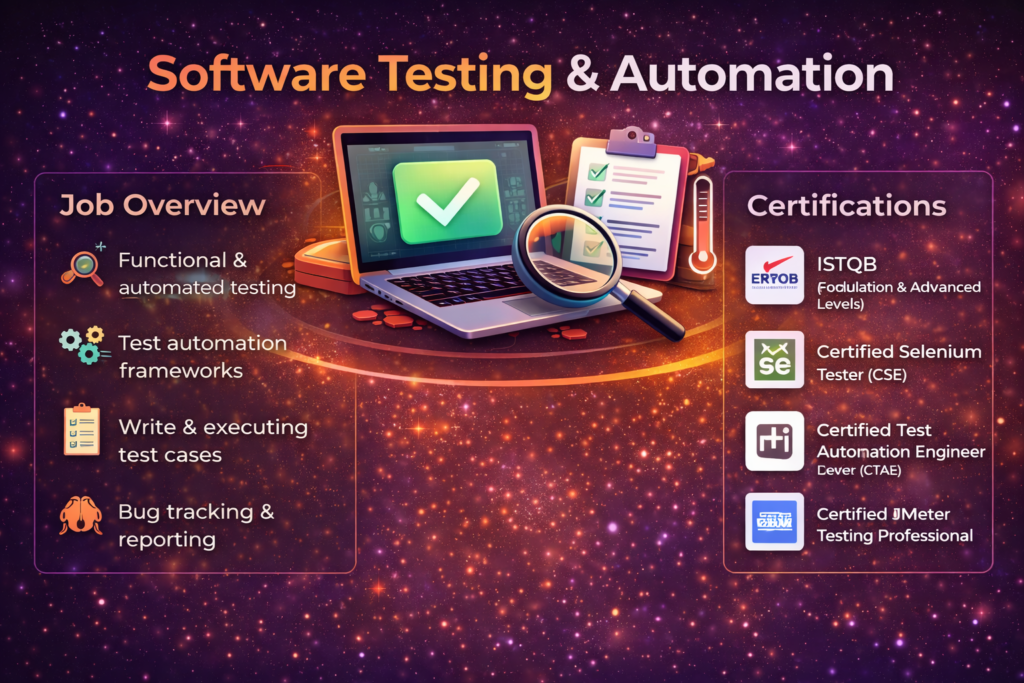
Quality assurance through software testing forms the backbone of reliable technology products, establishing this field among the most demanding courses in future tech careers. The software testing market is projected to grow by 7% through 2027, creating substantial opportunities for skilled professionals.
Software Testing Course Overview
Software testing programs typically run 3-4 months, covering test planning, execution, and documentation. Most curricula include testing methodologies, bug tracking, and automation frameworks. Programs often blend theoretical concepts with hands-on practice through real-world projects, preparing students for immediate workplace application.
Key Skills Covered in Software Testing
Essential testing competencies include:
- Technical skills: programming languages, automation tools, test management
- Analytical abilities: problem-solving, attention to detail, logical thinking
- Soft skills: communication, time management, adaptability
Software Testing Career Opportunities
The field offers diverse roles from Manual Tester (₹4.1 lakhs) to Performance Tester (₹5.6 lakhs) and Automation Specialist (₹11.3 lakhs). Ultimately, the software testing market exceeded USD 40 billion in 2023, creating sustained demand across industries.
Software Testing Salary Range
Entry-level testers earn approximately ₹3.0-3.3 lakhs annually, whereas mid-career professionals (3-5 years) command ₹5.1-5.6 lakhs. Location impacts earnings—Gurgaon offers ₹7.7-8.5 lakhs, followed by Bangalore at ₹6.1-6.8 lakhs.
Top Software Testing Certifications
The International Software Testing Qualifications Board (ISTQB) offers the most recognized credentials, including Foundation Level (CTFL), Advanced Test Analyst, and specialized certifications in Mobile Testing and AI Testing. These validate expertise and typically boost earning potential by 10-25%.
Who Should Take Software Testing
Ideal candidates include analytical thinkers with attention to detail, IT graduates, and professionals seeking stable career paths. Even those without technical backgrounds can succeed through certifications and practical experience, as employers often value demonstrated competence over formal education.
Comparison Table
| Course Name | Typical Duration | Entry-Level Salary (INR/Year) | Key Skills | Main Career Roles | Notable Certifications |
|---|---|---|---|---|---|
| AI & Machine Learning | Not mentioned | 19.9-22 Lakhs | Python/R, Mathematics/Statistics, ML Frameworks | ML Engineer, Data Scientist, AI Researcher | AWS AI Practitioner, Google AI Certification |
| Data Science & Analytics | 6-12 weeks | 5-8 Lakhs | Python, Machine Learning, SQL | Data Scientist, Data Analyst, Business Analyst | CAP, Microsoft Azure Data Scientist |
| Cloud Computing | 6-12 weeks | 4-8 Lakhs | Programming, Database Management, Containerization | Cloud Administrator, Support Engineer, Security Analyst | AWS Cloud Practitioner, Azure Fundamentals |
| Cybersecurity | 3-6 months | 7 Lakhs | Scripting, Network Security, Risk Management | Security Analyst, Penetration Tester, CISO | CISSP, CEH, CompTIA Security+ |
| Full Stack Development | 8 months | 4.04 Lakhs | HTML/CSS/JavaScript, Back-end Languages, Database Management | Full Stack Developer, Front-End Developer, Back-End Developer | HKU Full Stack Course, Udacity Nanodegree |
| DevOps | 8-16 weeks | 6-9 Lakhs | Programming/Scripting, Cloud Platforms, Containerization | DevOps Engineer, SRE, Release Manager | AWS DevOps Engineer, Azure DevOps (AZ-400) |
| Data Engineering | 6-8 months | 6.5-9 Lakhs | Python, SQL, ETL Frameworks | Data Engineer, Big Data Engineer, Data Architect | IBM Data Engineering, AWS Data Engineer |
| UI/UX Design | 3-6 months | 7.7-8.5 Lakhs | Visual Design, Research Methods, Prototyping Tools | UX Designer, UI Designer, Product Designer | Google UX Design, NN Group UX Certification |
| Data Analytics & BI | 3-4 months | 4.5 Lakhs | SQL, R/Python, Data Visualization | Data Analyst, BI Analyst, Visualization Engineer | Google Data Analytics, CompTIA Data+ |
| Software Testing | 3-4 months | 3-3.3 Lakhs | Programming, Automation Tools, Test Management | Manual Tester, Performance Tester, Automation Specialist | ISTQB Foundation, Advanced Test Analyst |
Conclusion
The technology landscape continues to evolve rapidly, creating unprecedented demand for skilled IT professionals across various specializations. Throughout this guide, we have explored the 10 most promising IT courses that will shape careers in 2026 and beyond. Artificial Intelligence, Data Science, Cloud Computing, and Cybersecurity stand out as fields offering exceptional growth potential and substantial financial rewards.
Salary trends clearly indicate that specialized technical skills command premium compensation. AI professionals earning ₹19.9-22 Lakhs annually and Cybersecurity experts commanding up to ₹30 Lakhs demonstrate the market’s willingness to reward expertise. Additionally, emerging fields like Blockchain and IoT present exciting opportunities for those willing to develop specialized competencies.
What makes these courses particularly valuable? Their alignment with industry needs ensures job security and advancement possibilities. The comparison table highlights how even entry-level positions offer competitive compensation across most disciplines. Nevertheless, the true value extends beyond salary figures—these fields provide intellectually stimulating work that contributes meaningfully to organizational success.
Choosing the right course depends on your personal interests, aptitudes, and career goals. Some fields like UI/UX Design welcome professionals from non-technical backgrounds, whereas others such as Data Engineering benefit from prior programming knowledge. Regardless of your starting point, certifications serve as valuable credentials that validate your expertise to potential employers.
The digital revolution shows no signs of slowing down. Consequently, professionals who invest in developing these in-demand skills position themselves advantageously in tomorrow’s job market. Whether you’re a recent graduate, mid-career professional, or considering a career change, these IT specializations offer promising pathways to rewarding careers.
Your journey into tech begins with a single step—selecting the course that aligns with your strengths and aspirations. After thoroughly evaluating these options, you can confidently chart your path toward becoming an indispensable professional in our increasingly digital world.
